Creating a vibrant garden filled with climbing plants can transform any outdoor space into a lush paradise. Whether you’re looking to cover a fence, add depth to a garden, or create an inviting entrance, the right climbing plants can make all the difference. However, selecting the perfect climbing plants for full sun can be a challenge, especially with so many options available. Let’s explore the 11 best climbing plants suited for sunny spots and provide tips on choosing the right ones for your garden.
Quick Answer
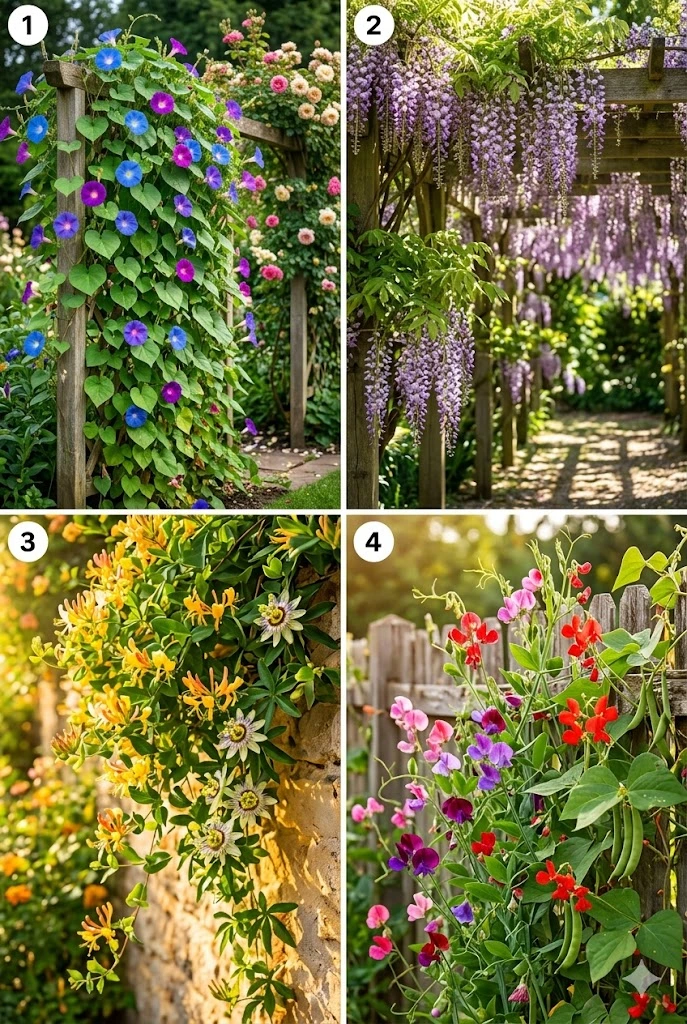
The 11 best climbing plants for full sun include: 1. Morning Glory 2. Clematis 3. Wisteria 4. Climbing Roses 5. Sweet Peas 6. Trumpet Vine 7. Passion Flower 8. Honeysuckle 9. Black-eyed Susan Vine 10. Kiwi Vine 11. Scarlet Runner Bean These plants thrive in sunny conditions and offer various colors, scents, and growth habits.
Understanding Climbing Plants
Climbing plants, also known as climbers or vines, are versatile additions to any garden. They can grow vertically by attaching themselves to structures or other plants, which allows for effective space utilization. Here are some key characteristics of climbing plants:
- Growth Habits: Climbing plants can have different growth habits. Some twine around supports, while others cling with tendrils or adhesive pads.
- Sun Requirements: While many climbing plants prefer partial shade, several thrive in full sun, making them perfect for sunny gardens.
- Maintenance: Most climbing plants require regular pruning and care to ensure healthy growth and flowering.
The 11 Best Climbing Plants for Full Sun
Here’s a closer look at some of the top climbing plants that flourish in full sun, including their unique characteristics and growing tips.
1. Morning Glory
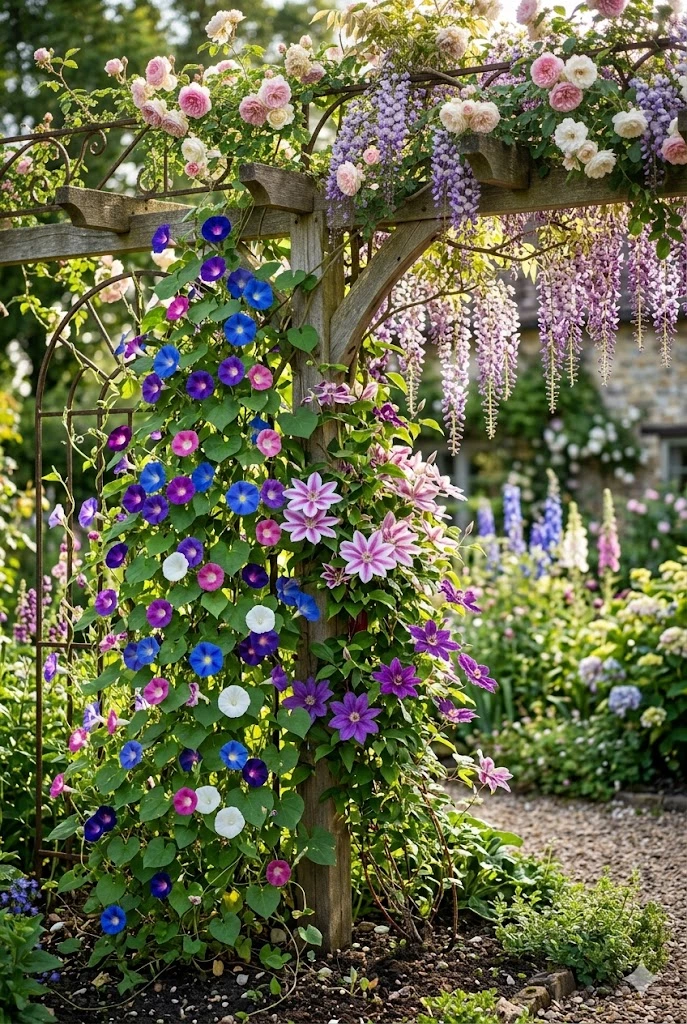
Morning Glories are known for their stunning, trumpet-shaped flowers that bloom in various colors, including blue, purple, pink, and white. These fast-growing vines can reach heights of up to 10 feet and are perfect for trellises and fences.
- Growing Tips: Plant in well-drained soil and ensure they receive at least 6 hours of direct sunlight.
- Common Mistake: Avoid overwatering, as Morning Glories prefer slightly dry conditions.
2. Clematis
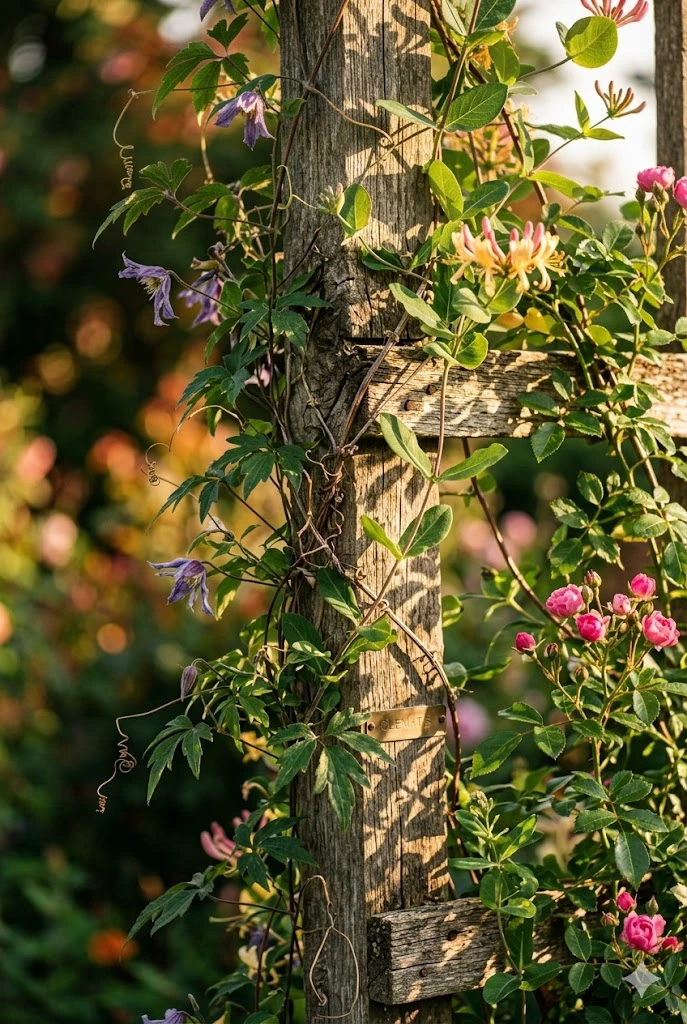
Clematis is a popular choice among gardeners for its large, showy flowers and diverse range of species. With some varieties blooming in spring and others in summer, this plant can provide continuous beauty throughout the growing season.
- Growing Tips: Provide a sturdy support structure and plant at the base in shade while allowing the vine to climb in the sun.
- Common Mistake: Be cautious of heavy pruning; only prune as necessary for the specific variety you choose.
3. Wisteria
Wisteria is renowned for its breathtaking cascading clusters of flowers, often purple or white. This vigorous climber can grow up to 30 feet tall, making it ideal for covering larger structures.
- Growing Tips: Ensure it has plenty of space and sturdy support, as it can become quite heavy when mature.
- Common Mistake: Wisteria can be invasive; regular pruning is necessary to keep it in check.
4. Climbing Roses
Climbing roses bring classic beauty and fragrance to any garden. They can cover arbors, trellises, and walls with their stunning blooms and lush foliage.
- Growing Tips: Choose a sunny location with well-drained soil and regular watering to promote healthy blooms.
- Common Mistake: Prune in late winter or early spring to encourage vigorous growth and flowering.
5. Sweet Peas
Sweet Peas are charming annuals that produce fragrant, colorful flowers. They are perfect for trellises and fences, adding a delightful scent to your garden.
- Growing Tips: Sow seeds directly in the ground in early spring for best results and provide support as they grow.
- Common Mistake: Water regularly but avoid waterlogging, which can lead to root rot.
6. Trumpet Vine
The Trumpet Vine is a vigorous grower that is admired for its large, tubular flowers that attract hummingbirds. This vine can reach up to 30 feet and is perfect for covering fences or walls.
- Growing Tips: Plant in well-drained soil and in an area that receives full sun to encourage flowering.
- Common Mistake: Regular pruning is necessary to control its growth and prevent it from becoming invasive.
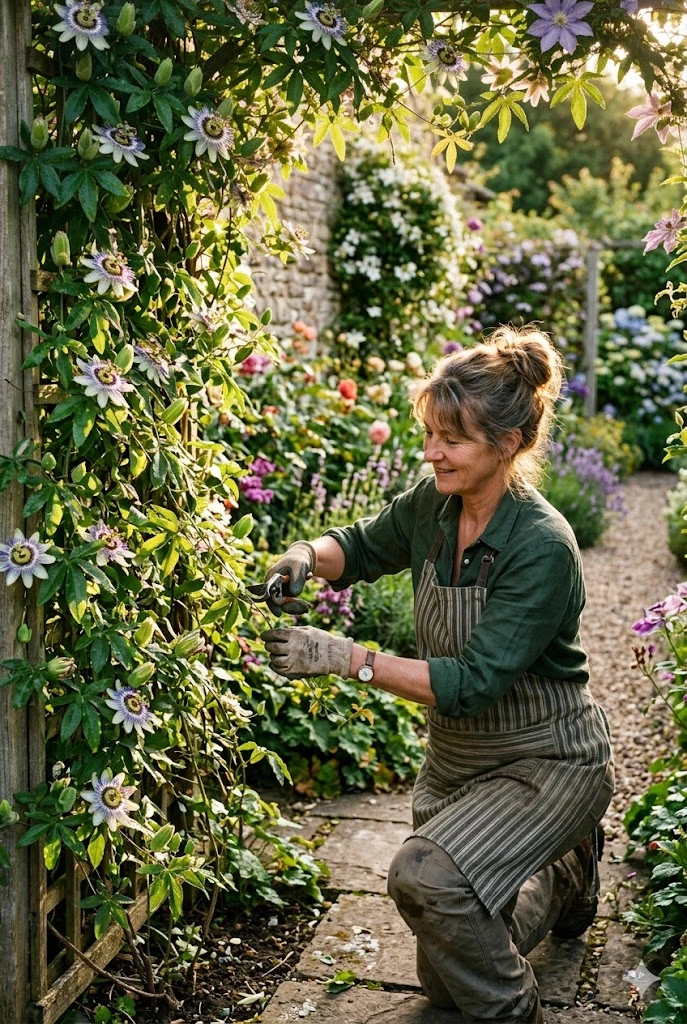
7. Passion Flower
Passion Flower is a unique climber with intricate flowers that can be purple, white, or even red. It is known for its exotic appearance and produces edible fruit.
- Growing Tips: This plant thrives in well-drained soil and full sun, with regular watering during dry spells.
- Common Mistake: Avoid planting in overly shaded areas, as it needs plenty of sunlight to thrive.
8. Honeysuckle
Honeysuckle is a sweet-smelling vine that produces fragrant flowers, attracting pollinators to your garden. With many varieties available, it can be used to cover walls, fences, and trellises.
- Growing Tips: Choose a sunny location with well-drained soil to maximize flower production.
- Common Mistake: Be mindful of its growth; regular pruning helps to maintain its shape.
9. Black-eyed Susan Vine
This cheerful vine showcases bright yellow-orange flowers that resemble the classic Black-eyed Susan flower. It’s a vigorous grower and can quickly cover supports.
- Growing Tips: Plant in well-drained soil and provide full sun for optimal growth.
- Common Mistake: Avoid overwatering, as this vine prefers drier conditions.
10. Kiwi Vine
Kiwi Vines are not only pretty but can also produce delicious fruit. They require a sturdy structure to support their growth and can reach heights of up to 20 feet.
- Growing Tips: Ensure they have plenty of sunlight and a strong trellis for support.
- Common Mistake: Prune in late winter to encourage healthy growth and fruit production.
11. Scarlet Runner Bean
This vibrant climbing plant is known for its striking red flowers and edible beans. It is a fast grower and is perfect for adding color to your garden.
- Growing Tips: Plant in well-drained soil and provide full sun for best results.
- Common Mistake: Regularly check for pests, as they can attract aphids and other unwanted insects.
How to Choose the Right Climbing Plant
Choosing the right climbing plant involves considering several factors, including your garden’s conditions, your aesthetic preferences, and maintenance requirements. Here are some tips to help you make the best decision:
Assess Your Space
- Sunlight: Measure how many hours of direct sunlight your planting area receives. This will help you narrow down your choices.
- Support Structures: Evaluate what you have available for support, such as trellises, fences, or walls. Some plants require sturdier structures than others.
Consider Your Climate
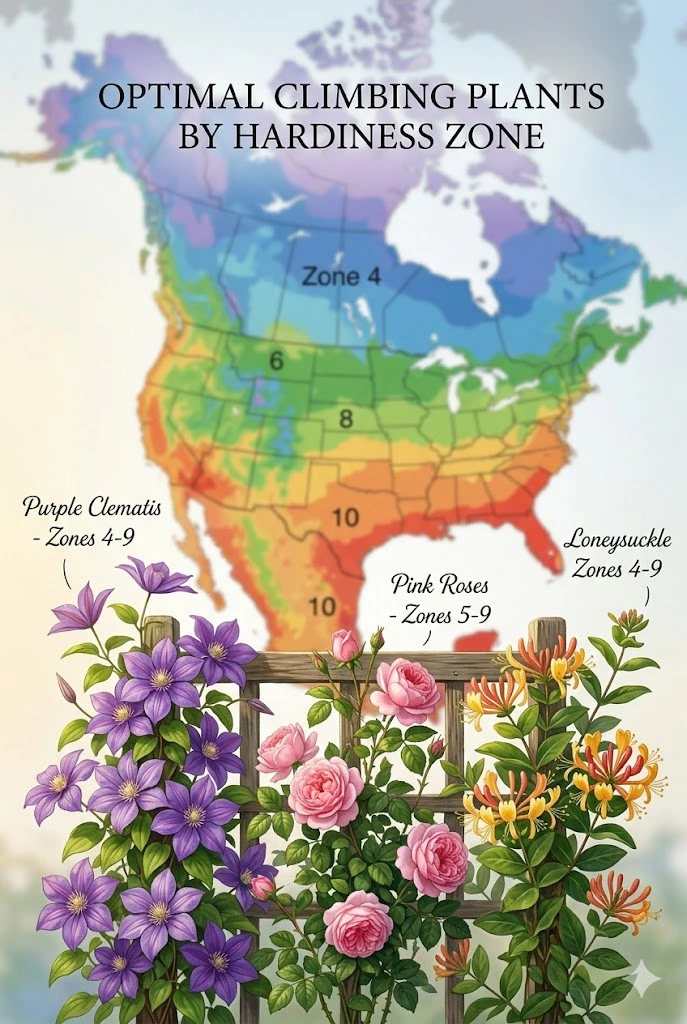
- Hardiness Zone: Know your hardiness zone to select plants that will thrive in your region’s climate.
- Temperature Extremes: Consider how well the plant can handle temperature extremes in your area.
Think About Aesthetics
- Flower Color: Consider what colors will complement your garden design.
- Growth Habit: Some plants grow more bushy, while others grow tall and narrow. Choose according to your space needs.
Maintenance Requirements
- Watering Needs: Consider how much time you want to spend watering your plants. Some require more attention than others.
- Pruning Needs: Some climbing plants need regular pruning, while others are more low-maintenance.
Expert Tips for Growing Climbing Plants
Here are some insider tips to help you successfully grow climbing plants in full sun:
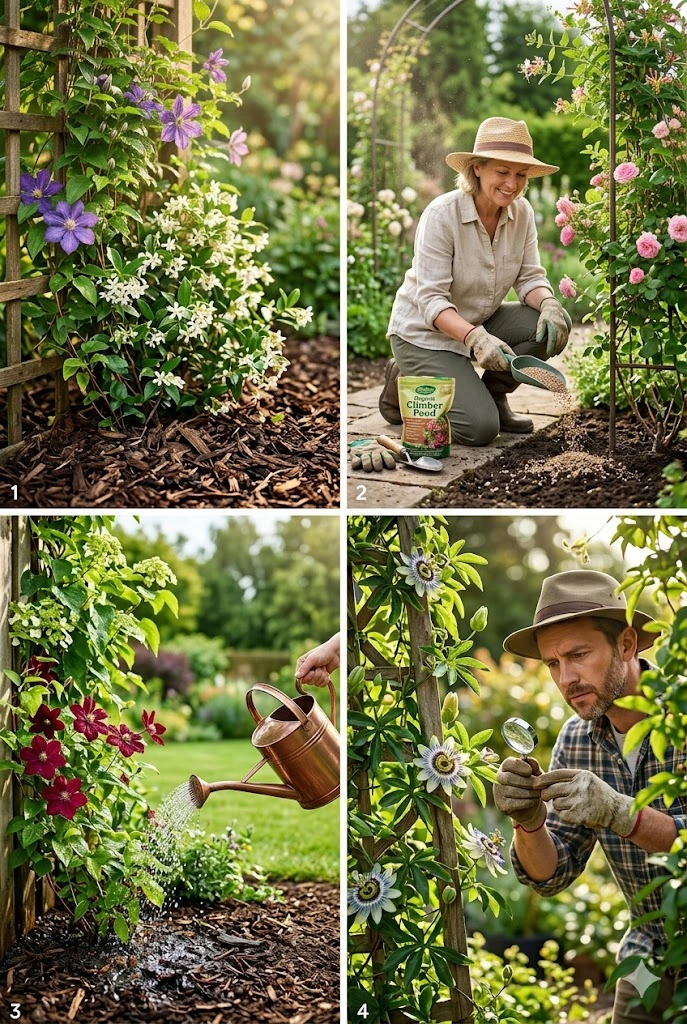
- Mulching: Use mulch around the base of your climbing plants to retain moisture and suppress weeds.
- Fertilizing: Regularly fertilize your climbing plants during the growing season to promote healthy growth and flowering.
- Watering: Ensure consistent watering, especially during dry spells, to keep your plants healthy.
- Pest Management: Keep an eye out for pests and diseases. Early intervention can prevent larger problems later on.
Common Questions (FAQ)
What climbing plants grow best in full sun?
Many climbing plants thrive in full sun, including Morning Glory, Wisteria, and Honeysuckle. Choose plants based on your region and desired aesthetics.
How much sunlight do climbing plants need?
Most climbing plants prefer at least 6 hours of direct sunlight each day to thrive and produce blooms.
Can I grow climbing plants in pots?
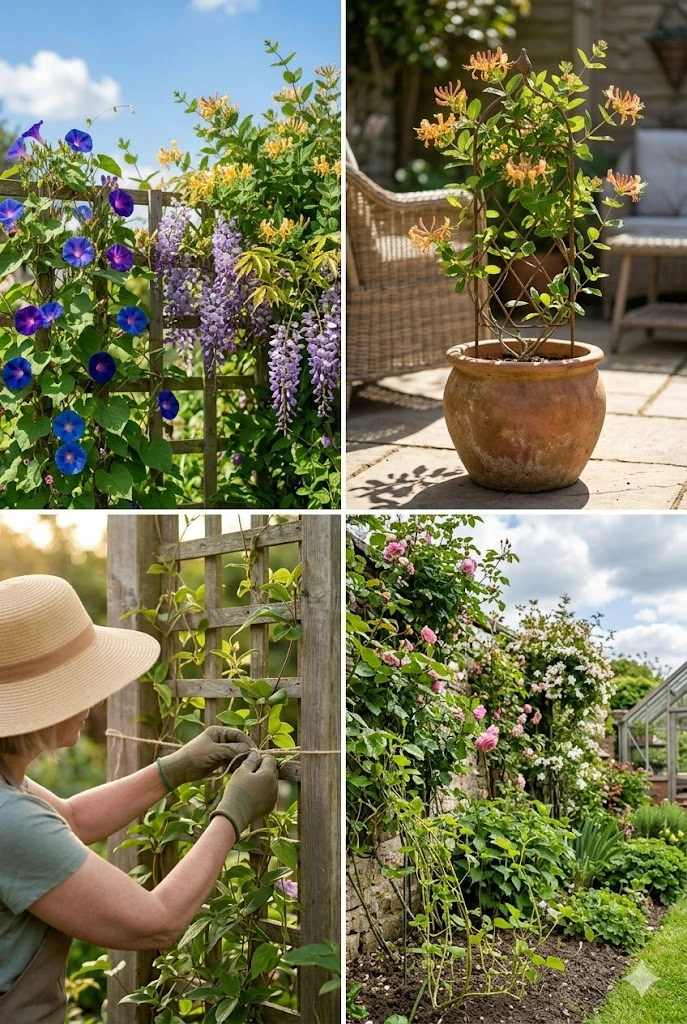
Yes, many climbing plants can be grown in pots. Just ensure the pot is large enough and has adequate drainage, and provide a trellis for support.
How do I train my climbing plants to grow properly?
Use trellises, wires, or other supports to guide your climbing plants. Gently tie them to the structure as they grow to encourage proper direction.
When is the best time to plant climbing plants?
The best time to plant climbing plants is in the spring after the last frost, allowing them to establish themselves during the growing season.
Conclusion
Adding climbing plants to your garden not only enhances its beauty but can also create a more inviting outdoor space. With a variety of options available, you can choose the perfect climbing plants for full sun that fit your style and maintenance preferences. Remember to assess your garden conditions and consider the unique qualities of each plant to ensure a successful growing experience. Happy gardening!